Our Verdict
Pros
- New display is a huge upgrade
- Extra inputs and encoders are a nice feature
- Nice paddle shifters
Cons
- Lower quality materials than other MOZA wheels
What’s the Deal with the KS Pro?
Prices shift around depending on your location, but it stays affordable no matter where you are. In the UK it’s £319 with tax already baked in. Americans pay $329. Europeans are at €349, Aussies fork out $589 AUD, and if you’re in Japan, it’ll run you ¥52,900.
| Region | Price |
|---|---|
| United States | $329.00 |
| Europe | €349.00 |
| United Kingdom | £319.00 |
| Australia | AUD $589.00 |
| Japan | JPY 52,900 |
The Construction Story
For what you’re spending, you’re getting tons of functionality and smart design choices, though yeah, the materials are where they saved money. Plastic buttons, composite frame, TPE rubber on the grips. Par for the course at this price.
But you know what? None of that really hurts the experience. The composite body actually feels pretty nice, light but solid enough. And rubber grips beat suede or Alcantara any day when it comes to durability. They won’t get all worn out and nasty after a few months.
They did spend money where it counts though. Those thumb encoders? Solid metal, all four of them. Paddle shifters are forged carbon fiber with magnetic hall sensors. The quick release mechanism is entirely aluminum. Smart choices on where to use premium materials.
Comparing Old vs New
I expected something that at least resembled the original KS based on the naming. Instead, MOZA threw out the playbook entirely. Sure, both wheels are 300mm and use similar base materials, but that’s literally where the similarities end.
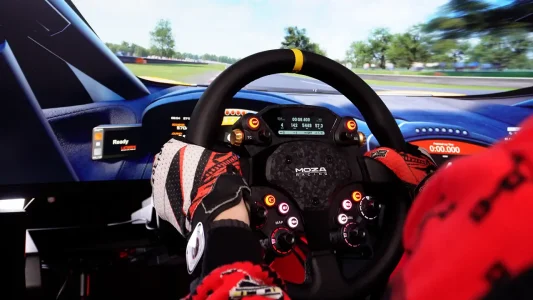
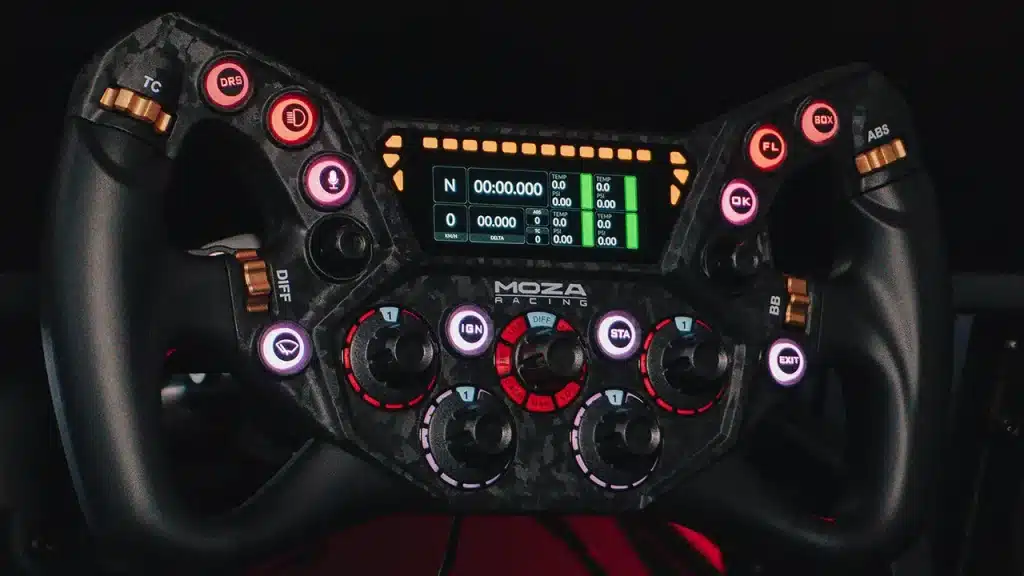
Everything about the controls got reworked. Where the original had 10 buttons exclusively on the front face, the Pro keeps those but sneaks in 2 more on the back. And they’re actually easy to hit, unlike certain other wheels where you’re basically playing finger twister to reach the rear buttons.
The encoder situation got a major glow up too. Five of them now instead of three, each with customizable RGB lighting you can tweak in the Pit House software. Looks sick and functions even better.
Those metal thumb encoders feel premium. Gold colored, smooth rotation, just the right amount of resistance. Not too stiff, not too loose.
They also ditched the joysticks completely in favor of 7 way funky switches, doubled up on thumb encoders from 2 to 4, added flag indicators next to the rev lights, slapped in that screen, and switched from metal to carbon fiber paddles.
Shifters That Actually Work Properly
Around back you’ve got four carbon fiber paddles running on magnetic hall sensors. Consistent feel, surprisingly quiet operation (MOZA really figured out the noise issue here), and they’re already positioned perfectly so you don’t need to fiddle with adjustments.
Here’s something I really appreciate: they spaced the paddles further from the wheel rim. The old KS would occasionally nail my thumb mid shift, which was super annoying. That’s completely gone now. Yeah, the smaller footprint means no room for those bonus modular paddles the CS Pro has, but honestly, I’m not losing sleep over it.
The quick release got a subtle upgrade worth mentioning. Still the same aluminum MOZA QR system, just with a new lip around the perimeter that makes removing it from your wheel base way less frustrating.
Universal Compatibility
Here’s something cool: there’s a direct data port on the rear, meaning this wheel plays nice with any wheel base you throw at it. Doesn’t matter the brand. MOZA even sells an adapter specifically for mounting this to universal hubs. I’ve been testing it with my Simucube 2 Pro base just to verify, and yep, works perfectly.
The Screen Situation
Adding a proper display might be the single best upgrade here. It’s a 2.99 inch unit, identical to what you’d find on the CS Pro. Rev lights and flag indicators frame it nicely.
Customization is wide open. Several preset dash layouts come ready to go, but if you want to get creative, MOZA’s dash editor software lets you build whatever layout you can dream up.
Final Verdict
I usually keep things pretty measured when reviewing gear, but sometimes you’ve just got to acknowledge when something hits the mark.
This wheel is legitimately great. MOZA completely rethought how everything should work, and the result is something that looks fresh and feels intuitive. Everything just makes sense.
Having that integrated display puts it ahead of what Fanatec and SIMAGIC offer at similar prices. Cramming this much capability into a £319 package is borderline absurd. If you’re hunting for a formula wheel without breaking the bank, you’d be silly not to consider this one seriously.
Frequently Asked Questions
Absolutely. The KS Pro has a direct data port on the back, which means it works with any wheel base regardless of manufacturer. MOZA sells a third party quick release adapter that makes mounting it to a universal hub straightforward. It’s been tested successfully with wheel bases like the Simucube 2 Pro, so you’re not locked into using only MOZA bases
The KS Pro is essentially a complete redesign. While both wheels share the same 300mm size, the Pro adds a 2.99 inch display, increases encoders from 3 to 5 (all with RGB backlighting), upgrades from 2 to 4 thumb encoders, adds 2 rear buttons, replaces joysticks with 7 way funky switches, switches from metal to carbon fiber paddle shifters, and includes flag lights alongside the rev bar. The Pro also positions the paddle shifters further from the wheel body to prevent thumb strikes during shifting.
For the price increase, you’re getting significantly more functionality. The integrated display alone sets it apart from competitors like Fanatec and SIMAGIC at this price point. Combined with better inputs, improved RGB lighting, upgraded encoders, and better paddle shifter positioning, the KS Pro offers excellent value at £319/$329. The materials are still budget friendly (composite body, plastic buttons), but the overall package feels much more premium than the price suggests.
Review written by Felix König